The French Consulate

Back at the beginning of April, I had applied for a long-stay visa that would allow me to (hopefully) live, work, study, and travel in France for more than the typical 90-day tourist visa. The application itself was relatively easy to fill out and print, but scheduling the appointment at my nearest consulate was a completely different beast. The French consulates in the United States recently changed their scheduling method (and software), which has resulted in an already difficult process becoming even more so. I started trying to book an appointment for my visa on 10 April and four days later, after several calls, emails, and frustrating online attempts, I was finally able to schedule an appointment. However, that appointment wasn’t for another over six weeks, on 30 May. Even the people at the consulate were frustrated by the new system; when I called and spoke with the young lady in Boston, she said “I’m so sorry – prior to this new system, I could have helped, but now, my hands are tied.” I got very nervous that there wouldn’t be time for me to complete another application/interview if my first one got denied or to get my passport back in time for my planned departure at the end of June. I also became hesitant to book anything (classes, lodging, etc) any further out than 60 or so days after my arrival because I wasn’t sure if I’d be able to (legally) stay in France.

Since so many of my future plans in France depend on my ability to get a visa, I have been a bundle of nerves since my initial decision to go to France. Boston is about a four hour drive from where I live, so I went down the day before and stayed with some friends in Georgetown, which is about 40 minutes outside of Boston (according to Google Maps; according to my friends, it’s more like two hours outside of Boston when you consider morning traffic). It really helped me to be with friends the night before because they helped keep my mind off of the appointment the next morning, whereas if I had been by myself in a hotel room, I’d have just spent the whole night stewing in my anxiety. My friend and I had supper out, inadvertently participated in some pub trivia, and then went home to turn in early. My friends had suggested that I take the train into the city, rather than driving in during morning rush hour and subsequently trying to find a place to park. Since my brain was pretty fried, I had my friend write down the directions for which trains I needed to take, which tickets to buy, and where to go between each station “as though I was a five-year old” (as I told him), which he very obligingly did. I ended up going to bed a bit later than I had planned, but it ultimately didn’t matter, since I didn’t sleep more than about a total of 20 minutes all night for tossing and turning.

I got out of bed super early and headed in to the commuter train station. Thanks to my friend’s super-exact instructions (for a five-year old), I had no issues getting the commuter train, switching to the subway system, and walking to the consulate building. Since I had gotten in to the city almost an hour prior to my appointment, I headed over to Starbucks to have some oatmeal and a green tea. While I was at Starbucks, almost as soon as I had been handed my order, the fire alarm started going off. In Maine, when a fire alarm goes off, people clear the building and wait at a pre-arranged location until the fire department says you can go back inside. Apparently, in Boston, when the fire alarm goes off, you don’t even bat an eyelash and you get your morning Starbucks fix (so weird!). I finished my oatmeal to the sound of the fire alarm, then walked over to the consulate building. I arrived at the building around 0840, checked in, but was told I couldn’t go upstairs until 0900, which was my appointment time. I waited in the (gorgeous!) lobby until shortly before 0900, was cleared to go upstairs (in an elevator that was more technologically-advanced than any other elevator I’ve ever seen), and headed down the hallway to the consulate office. I got to the door, showed my appointment letter and ID, and was instructed to go into a small waiting room and have a seat. At one end of the room was a young man seated behind a bank teller-type glass window. Before I could even sit down, the man beckoned me over, asked my name, and asked me for my application. I signed the application (I hadn’t been sure if it was supposed to be signed in front of them, so I waited) and handed it to him. He then asked for my passport, copy of my passport identity page, and a number of other documents that had not been on the list of things I needed. He then asked me what my plans were while there, if I planned to work and as what, about my lodging arrangements, and how long a visa I was after. I told him that I am a nurse in the US and could look into getting a license there, but would also be willing to work in retail or another establishment. I told him that I was also already registered for some classes and had looked at a couple of Masters and PhD programs. I then told him that my long-term goal is to become a French citizen. He stepped away to ask his boss (I’m assuming the visa officer) a question, came back, and told me that they could issue me a long-stay tourist visa, but that I would not be able to work on that visa and would therefore need to write a letter to the consulate affirming that I would not work while in France. I asked him whether I could convert the visa to a student visa once in France and registered for classes and he told me I could (I’m not sure that that’s true, though; I’m afraid I’ll need to independently apply for a student visa and then come back to the US to get it), partially because the student visa would at least allow me to work up to 20 hours a week. I also asked him if I could renew that visa while in France and he told me I could (again, I’m not sure about this and will need to confirm with… someone). He captured my fingerprints digitally, then told me that the application fee was €99, and asked how I’d be paying. Since I hadn’t been sure what forms of payment they accepted, I had gone to my bank and purchased euros prior to leaving Maine, but he said “Oh, we don’t accept euros”, so I ended up paying with a credit card. As he was filling out my receipt, he told me “you can go ahead and start registering for classes if you want” (though I’m still a bit nervous to do so until I actually receive my visa). The biggest “discomfort” of my appointment was that other people had come in behind me and were sitting in the room waiting for their appointments, but able to overhear all of the information that he and I discussed.

I told the consulate my departure date of 24 June and gave them a copy of my airline ticket. The man asked whether I’d be returning to Boston to get my passport back, but I told him that I would prefer to have it mailed back to me, signed a waiver absolving them of responsibility if my passport gets lost, and gave him a pre-paid, addressed envelope to send my passport back in. I was completely done by 0915, got the trains back to my car, and headed back up to Maine. I was pretty surprised by the fact that I never got asked if I spoke French at all and didn’t have an actual “interview” with a visa officer (the young man seemed to be more of an intern, of sorts). Once back in Maine, I submitted my FBI background check request online, went to my local police department to have the fingerprints done, and then to the post office to overnight my fingerprints to the FBI. I came home and wrote my letter of understanding about not working and emailed it to the man at the consulate. Now, I just sit and wait (and hope that my passport gets here before I’m scheduled to leave).

Here’s the synopsis:
Items I was told to bring:
– Appointment confirmation letter (without which you won’t even be allowed in past the lobby security guards)
– My passport (which they keep when you leave, unless they deny your visa request that day)
– A color copy of the identity page of my passport (and any pages with stamps on them)
– Visa application
– Proof of residence (drivers license, utility bill, etc)
– €99 processing fee (they didn’t accept euros, though they accepted credit cards and US cash)

Items I was not told to bring, but they requested once there/took:
– Bank/Financial statements
– Proof of expat health insurance
– Travel arrangements (plane/train tickets)
– Lodging arrangement confirmation
– School/Class enrollment confirmation (if applicable; otherwise, job offer confirmation)
– Reference letters
– Prepaid, pre-addressed, trackable envelope to mail the passport back to me
– FBI criminal background check
– Letter stating I wouldn’t work while on a long-stay tourist visa

As always, thanks for reading this! I welcome your feedback or questions!

À la prochaine,

The Expat Maineiac

#expatmaineiac #intlteflacademy #movingtofrance

Less than a month to go!

I remember when I was in the fifth grade feeling like Christmas (and its school break) would never come. Every kid in the class was so excited as the holidays approached and it felt like it could just never come fast enough. In response to our wishing the time away (I mean, who wants to wait for presents and no school?), our teacher, Miss Ellis, told us “don’t wish the time away, because the older you get, the faster it flies.” As fifth graders, we obviously didn’t believe her, but that advice has stuck with me over the years and seems to ring more and more true with each passing year.

On the same token, my upcoming trip to France still seems so far away, but will be here before I know it. The smallest things lately have been driving home to me just how quickly my trip really is approaching. I purchased groceries the other day and a number of the perishable items don’t expire until after I leave the States. I have been driving around my hometown, where I was born and have lived most of my life, and taking note of places and buildings that I may not see again for some time. I ate dinner last night from my favorite sushi place in town, where I won’t be able to eat again for some time (they’re closed for vacation until after I leave). Four weeks from this very minute, I’ll likely already be in bed for my first full night in France.

This weekend, one of my sons and I took a trip up to Fredericton, New Brunswick, Canada, which is a place that I spent a large part of my summers growing up. Even though I’m from Maine and have lived here most of my life, the greater Fredericton area has always felt like a second home and I get such a sense of comfort when I go there. With my son’s upcoming graduation, our local foreign exchange students leaving to go back to their home countries, and graduation and bon voyage parties, time to see and enjoy the old haunts is getting slim. Since this was a long weekend and we didn’t really have anything planned, it was the perfect time to head up to New Brunswick. We were only gone for about 25 hours total (it’s a great day/weekend trip!), but got to visit with a couple of old friends, see some of the sights around the city, and do a bit of shopping for things we can’t get here in the States.

My last few weeks have been consumed with preparations for my upcoming adventure. I’ve been waiting six weeks for the interview appointment for my French visa application and now it’s only a little over 36 hours away. I’m so nervous for this appointment since whether I am able to stay long-term in France is dependent on this appointment. I have joined a number of various “expats in France” boards on social media and they have proved an invaluable resource in my attempts to be as prepared as I can be before I go. However, I had made a post on one of the boards asking for advice on which travel/expat insurance people used and, after a couple of back-and-forth exchanges, I was told “you’ll be lucky to get any visa at all”. Despite my determination to remain “cautiously optimistic”, I can’t get that statement out of my head. It’s amazing how quickly and easily one statement from a total stranger has really made me doubt what the outcome of this week’s appointment will be.

In the meantime, I’m getting ready to head down to Boston to visit the French consulate. I’ve been waiting so long for this appointment and my life’s dream rests on it. I’ll keep you posted as to the outcome!

À la prochaine,

The Expat Maineiac

#expatmaineiac #intlteflacademy #movingtofrance

Global Entry

In preparation for my upcoming journey, I got a credit card (I haven’t had one, or even felt the need to have one, for at least the last twenty years). When that card arrived, I read through the literature and noticed that one of the “perks” of the card was that the $100 application fee (which, incidentally, also includes enrollment in TSA Precheck) for the Global Entry program would be reimbursed. Since I have a clean background (no driving or criminal convictions), a valid passport, and am a US citizen, I figured I’d apply and try to get enrolled in the program prior to my departure for France. Considering that the program is good for five years, it seemed like a good thing in which to enroll.

In March of this year, I applied for the TSA Precheck Program when I traveled down to Florida. For $85 for five years, I would be allowed to keep my jacket and shoes on and leave my laptop in its bag whenever I flew. The program was SUPER easy to apply for; I submitted an online application, made an appointment for later that same day at an enrollment center about ten minutes from my house, paid the fee, went to the appointment (where fingerprints and a photo were taken), and three days later I found out I had been approved and received my Known Traveler Number (KTN). I guess I, somewhat naïvely, expected the Global Entry program to happen as quickly.

On 20 April, I submitted my online application for the Global Entry program. Unlike TSA Precheck, which is administered by the Transportation Security Administration (TSA) (duh), Global Entry is administered by Customs and Border Protection (CBP). Because the Global Entry program allows expedited clearance through customs when re-entering the United States, the vetting is much more thorough and involves a background check, so therefore takes longer. It wasn’t until 11 May that I found out I had been “conditionally approved” and needed to schedule my interview at a CBP enrollment center. Upon checking the website, I found out that the closest center (incidentally, the only center in Maine) was two hours away in a small town near the Canadian border. I scheduled my interview for the following week, took the day off from work, and drove nearly two hours to get to the center. Since I had allowed plenty of time to get there, I arrived about an hour prior to my appointment and went in to ask if they could see me earlier than my appointment time (I had brought a book with me just in case they couldn’t). Other than the two CBP employees, there was no one else in the postage-stamp-sized office and they seemed more than happy to break the monotony and do my “interview” early. I gave them my passport and driver’s license, answered a few quick questions, had my fingerprints and photo taken, was handed a pamphlet on how to use the Global Entry kiosks, and was told that my ID card would arrive within a couple of weeks. As I was walking out of the building, I received an email from CBP that I had been approved for the program (which struck me as funny since it took almost three weeks just to get an email that I could schedule my interview).

Since I had spent almost two hours driving to the center and would spend almost two hours driving home, I decided to pop into St Stephen, New Brunswick, Canada and have lunch. I made a quick trip to the grocery store for some Canadian tea and Yop drink, ran over to Dollarama for a couple of small items to take on my upcoming move, and then went to Pizza Delight for a Big Crave donair. I took a little post-lunch stroll along the river, then headed back into the US and picked up the highway home. All in all, it was a good day.

Bottom line (or TL:DR):
– Apply at least six to eight weeks prior to your anticipated departure;
– Submit your application and pay $100 for Global Entry and TSA Precheck;
– Once conditionally approved, make your interview appointment at your nearest CBP enrollment center;
– Attend your interview (with your passport, driver’s license, and proof of residence)
– Receive your approval and ID card (obviously, if approved)

As always, thank you for reading! Please let me know if you have any questions or if there’s anything I can answer for you.

À la prochaine,

The Expat Maineiac

#expatmaineiac #intlteflacademy #movingtofrance

UPDATE: My Global Entry ID card arrived six days after my interview appointment. I don’t know whether they always arrive this fast, but I was pleasantly surprised. I logged on to my Trusted Traveler Program profile this morning and activated my card, which completed my Global Entry enrollment (incidentally, the card is not required to be presented for air travel, just at land border crossings {i.e., Canada to the US or Mexico to the US}).


Paris Pass Lib’

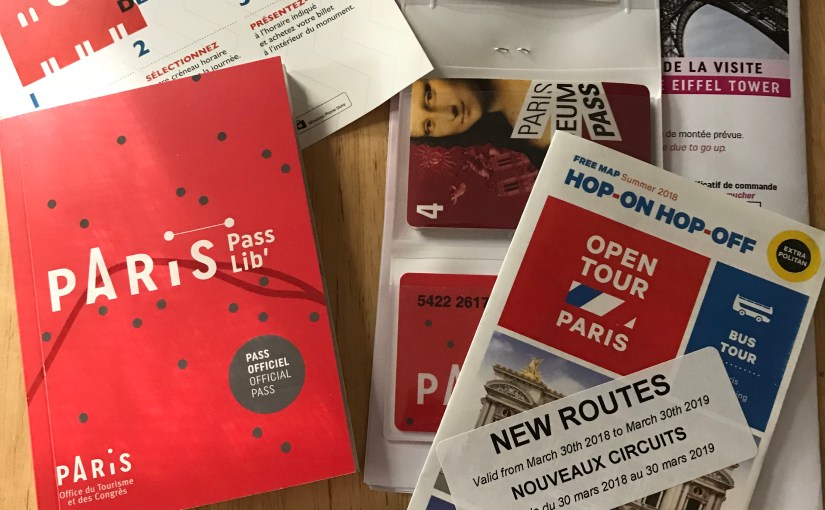
When I mentioned a couple of weeks ago to one of the French exchange students staying in the area that I had decided to leave the United States early in order to visit Paris for a few days, his immediate response was “I will help you plan your trip so you don’t get trapped like a tourist!”. What that meant was that I’m now booked into my first-ever Airbnb stay and that I ordered the Paris Pass Lib’ from the Paris Convention and Visitors Bureau. Since I’m not staying at a hotel in Paris (where it could be delivered for about 12), I don’t yet know my Airbnb hosts “in real life” so don’t feel comfortable having something delivered there (delivery within France would have cost about 10), and there’s not a convenient pickup location near my arrival airport (obviously, I could have picked it up for free), I elected to pay the 24 shipping fee and have the pass shipped to my home in the US. I was pretty upset at how much the shipping cost (thank goodness the US dollar is currently a bit stronger against the Euro than it usually is!), but that quickly changed when my Paris Pass Lib’ package arrived about five days after I ordered it!

I’m pretty excited about all of the things included in the Paris Pass Lib’. I went with the five-day adult pass, which cost €155 (or €31 per day) and includes a one-hour cruise on the Seine; unlimited on/off access for one day on the Paris Open Tour Bus; a four-day Paris Museum Pass (which allows access to over 50 monuments and museums in and around Paris, including Notre Dame Cathedral, the Arc de Triomphe, the Louvre, and Versailles); five days of unlimited travel within zones 1-3 in Paris on the bus, metro, tram, and RER; and the Paris Pass Lib’ booklet and Paris Map Guide. I also paid an extra €20 to get access to the 2nd floor of the Eiffel Tower (and the ability to skip the ticket lines), though I’m now realizing that that’s not the top level open to spectators and I’ve submitted an inquiry to find out how I get access to the top (third) level.

I was impressed with all of the materials that came with my Pass Lib’ and the speed with which it was delivered. The booklet is small enough that it will be very handy to carry around with me for quick reference. The four-day museum pass actually contains a folded up information sheet/map within it, so again, it will be easy to carry around with me. Booking tours such as my trip up the Eiffel Tower and the tour into Notre Dame’s towers is done either online or through an app, also making those easy to track. It’s been 26 years since I was last in Paris and it will definitely be different this time around than it was then (I remember trying to find somewhere to buy film that wouldn’t charge tourist prices because I had used up all my film; now, I’ll just need to remember my auxiliary/portable phone charger), but I’m so excited to see Paris again!

The Expat Maineiac

Things are Starting to Fall Into Place

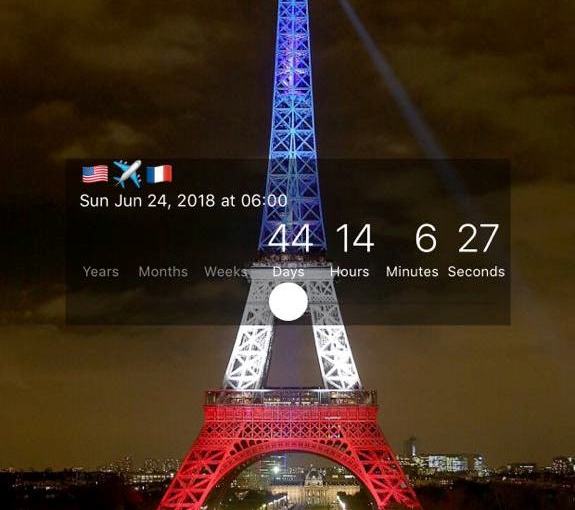
I downloaded a countdown app which tells me how long until I leave. As of right now, there are just over 44 days until I leave on the biggest adventure of my life. Being a planner, I’ve been trying to get as many things settled as I can before it’s time to go so that there are as few details left up in the air as possible. This pre-planning has also shown me, though, that I may not be able to get everything finalized before I go and that I need to be ok with just letting some of those details work out as I get places.

My intention is to live and work in France. I’m a nurse in the United States, but I plan to start my expat adventure by teaching English as a foreign language (TEFL). I will be taking my TEFL certification course at TEFL Toulouse, a partner of the International TEFL Academy (ITA) in Chicago, the organization through which I’ve chosen to get my certification. My amazing admissions advisor at ITA, Amanda Saccaro, was so good about answering all of my (many, MANY) questions and helping me while I was trying to decide if TEFL was something I wanted to do, and then which organization I wanted to go through to obtain my certification. If you’ve ever thought about getting a TEFL certification, I highly recommend talking with Amanda at ITA and she’ll help answer any questions you have. Once I had decided to go through ITA, I had a choice between taking the certification online over 11 weeks, which is how the majority of people obtain it, or by doing it in person through ITA or one of their partner organizations around the world. After doing TONS of research on the pros and cons of each type of training, I decided to take the plunge and do the four-week intensive in-person certification class in Toulouse, France.

I’ve always dreamed of living in France, ever since I spent the summer there when I was 15, and getting my TEFL certification in France is one step towards that lifelong dream. Since I am over age 35, the Teaching Assistant Program in France (TAPIF) and its visa is unfortunately not an option for me, so I’ve had to figure out another option to get a visa that will allow me to stay in France long-term. I can travel to France on a 90-day tourist visa, but I am not eligible to work on that visa and the 90 days applies to the entire Schengen area within Europe, so if I want to travel around Europe at all, I’d have to do it within those 90 days. My next visa option is to obtain a student visa, but in order to do that, I’d have to enroll in and pay for university classes for at least one semester (and then, of course, attend and work hard at those classes). Not only is that a more expensive option due to having to pay for school, but I’d be limited to working 20 hours or fewer per week, so not a great way to make a living. The option that I’ve chosen to try for is the long-stay visa, but there is a great deal of uncertainty with that visa, at least at the outset. I originally submitted my online application for my long-stay visa at the beginning of April. Because the French Consulates in the US changed to a new system to book visa interview appointments, it took me several phone calls and another few days just to get an interview appointment booked, and then the appointment wasn’t until the end of May! Since the visa has to be issued prior to my departure from the United States, I am so glad that I started looking into the visa as soon as I made the decision to go overseas and didn’t wait until it was closer to time to leave. Had I waited, there would have been no chance of my getting an interview appointment prior to leaving the US and I would have had to either choose another country to live and work in or to come back to the US to apply for a long-stay or student visa. Once my visa interview takes place, it can still take up to two weeks until I find out whether my visa has been approved, but I’m choosing to remain positive and hope that I’ll get the visa.

I still have some time until my interview appointment and determination, but there’s plenty to do in the meantime. Here are some of the things I need to remember to do before I leave:

– Get a power of attorney drawn up so that one of my family members can take care of important business for me while I’m overseas.
– Get an international driving permit (from my local AAA office)
– Make sure my current US driver’s license will still be valid for at least a year
– Make sure my passport is valid for at least a few years
– Cancel the subscriptions to things I won’t need (my local public broadcasting station, SiriusXM and OnStar in my car, Amazon Prime and Netflix {though, truth be told, I’m still up in the air on these since I might be able to use them overseas}).
– Get a dental cleaning, eye exam, physical exam, etc. and make sure my immunizations are up-to-date
– Arrange a VPN service to use once I’m overseas
– Start unsubscribing to all the marketing emails I receive (this has actually been pretty cathartic and has helped clean up my inbox)
– Set up this blog, an Instagram account, and an email address to document my travels

If you’ve read through this far, thank you so much for sticking with me! This is my first real blog and I promise it will get more interesting as I start my travels. I started this blog in the hopes that it will be able to help someone else who is thinking about going overseas and is looking for some information. I have read through and bookmarked countless other blogs lately and they have been such an incredible help to me, so I’m hoping to pay it forward. If you have any questions or input, please feel free to contact me through this site or at expatmaineiac@gmail.com

The Expat Maineiac